

The Interview Isn’t What It Used to Be: Why Remote Hiring Needs a Rethink
3 mins read
As the Managing Director of a technology recruitment business, I’ve spent years helping clients build high-performing teams. But over the last 18–24 months, something has fundamentally changed. The interview — once the cornerstone of hiring decisions — is no longer as reliable as it used to be. And the shift has happened quietly. The…
As the Managing Director of a technology recruitment business, I’ve spent years helping clients build high-performing teams. But over the last 18–24 months, something has fundamentally changed. The interview — once the cornerstone of hiring decisions — is no longer as reliable as it used to be.
And the shift has happened quietly.
The Rise of “Perfect Candidates”
We’re seeing candidates who:
Interview flawlessly, Demonstrate deep technical knowledge, Communicate with clarity and confidence
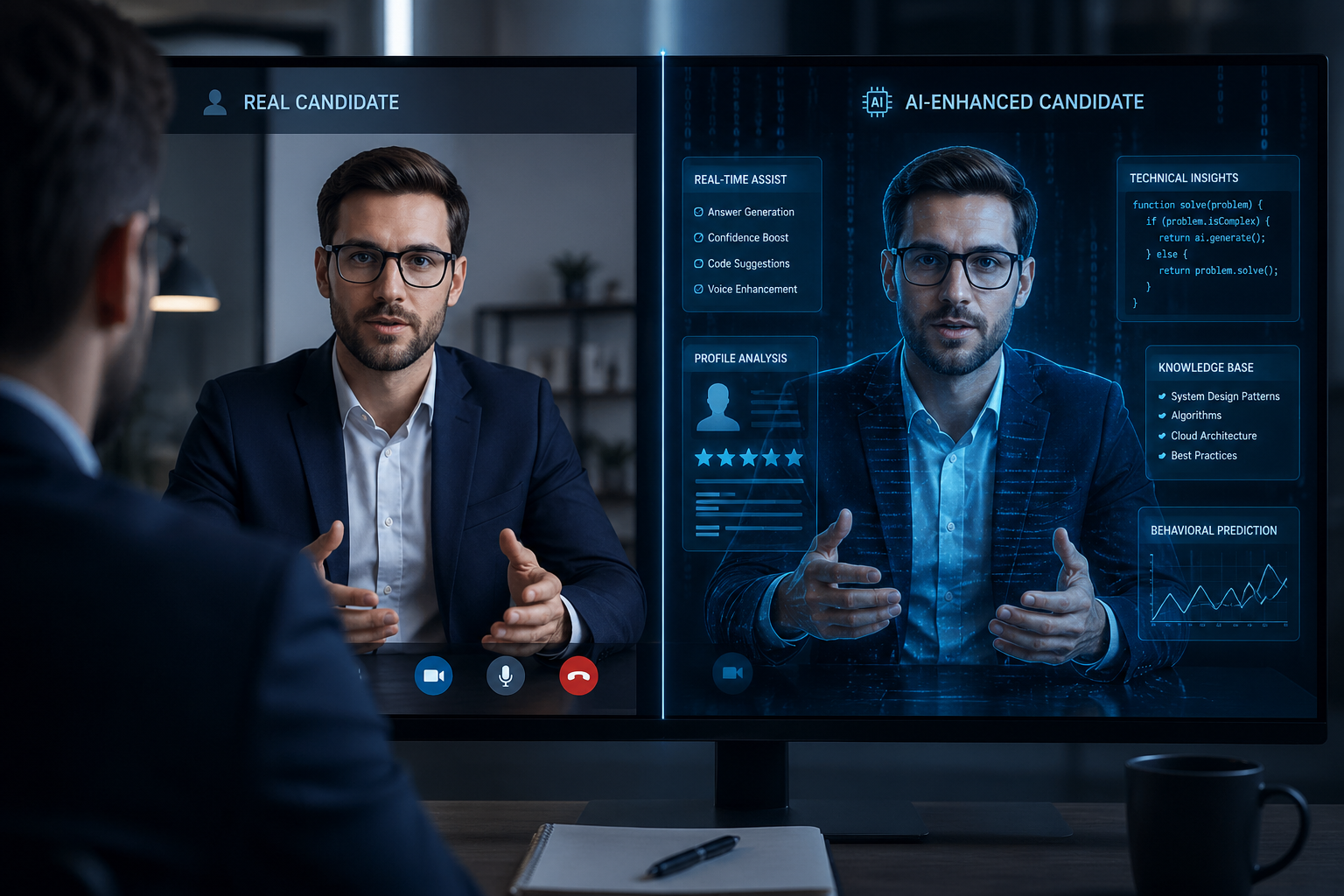
This isn’t about capability gaps in the traditional sense. It’s about something more complex. Technology has entered the interview.
AI Has Changed the Game
There are now widely available tools that can:
Provide real-time answers during interviews, Generate technically correct responses on the fly, Assist with coding tests or technical assessments live
What used to require deep experience can now be augmented instantly. And in a remote environment, this is incredibly difficult to detect.
Team Interviews: Stronger, But Not Bulletproof
Many organisations have responded by introducing panel or team interviews. This is a positive step.
Multiple perspectives:
Reduce individual bias, Improve decision quality, Create better candidate evaluation
But here’s the issue: If the input is flawed, the output still fails. If a candidate is being assisted — by AI or another individual — even a strong panel can be misled.
The Risk No One Talks About
This isn’t just about hiring someone who underperforms. In technology hiring, the risks are far greater:
Access to internal systems and data, Exposure to client environments, Potential entry points into critical infrastructure
Put simply: You’re not just hiring a CV — you’re opening your firewall.
Real-World Signals
While companies rarely publicise these incidents, there have been increasing reports globally of:
Developers outsourcing their work after being hired, Candidates using hidden assistance during interviews, Fraudulent identities used to secure remote roles
In the US, the FBI has previously warned about North Korean operatives posing as remote IT workers to gain employment in Western companies. This isn’t hypothetical.
What This Means for Hiring
The traditional model: CV → Interview → Offer
…is no longer enough.
And while technology has made hiring faster, it has also introduced new vulnerabilities.
The Shift We Need to Make
As recruiters — particularly in technology — we have a responsibility to stay ahead of these changes. That means:
Going beyond surface-level validation, Challenging what we see in interviews, Applying human judgment more deliberately, Introducing structured verification at key stages
Because the reality is: Technology can enhance a candidate — but it can also obscure the truth.
Final Thought
Remote hiring isn’t going away. AI isn’t going away. But trust in the hiring process now needs to be actively reinforced. The interview still matters — but it must be supported by verification and, where it matters, real-world interaction.

Be in the know!
Subscribe to our monthly newsletter!